
Moving the Needle: Why 'Acceptance' is the Foundation of a Supportive Home
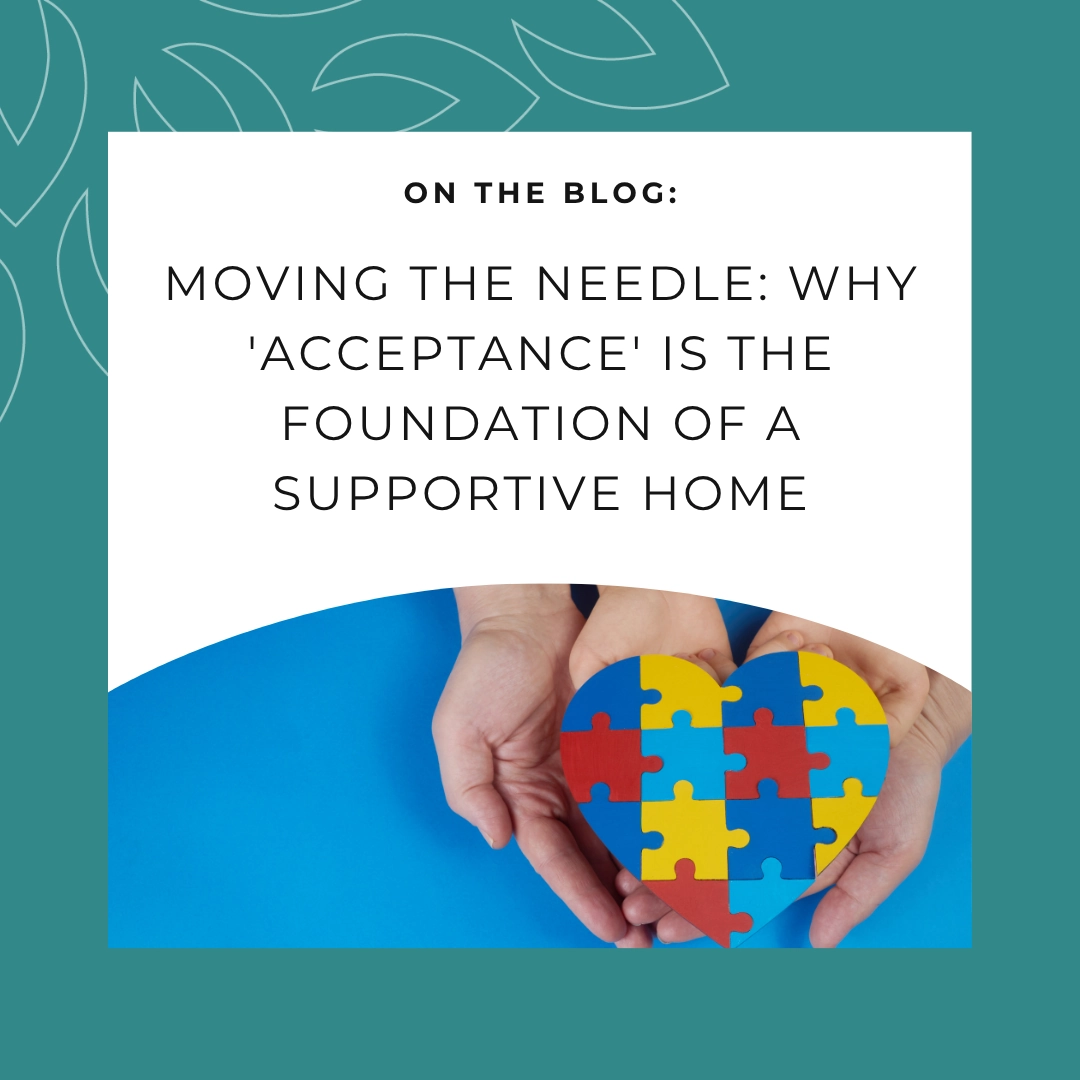
Every April, the conversation around autism becomes more prominent. There are more stories, more resources, and more people trying to better understand what life looks like for individuals on the spectrum. Initiatives like Autism Awareness Month, supported by the Autism Society of America, reinforces the need to better understand these experiences and design environments that truly support neurodiversity.
But awareness is just the starting point.
If the goal is to create better, fuller lives, we have to go further. We have to move toward acceptance.
Because real well-being does not come from being recognized, it comes from being understood.
Awareness Starts the Conversation. Acceptance Moves It Forward
Awareness has opened a lot of doors. More families are getting earlier diagnoses. More educators and caregivers are learning how to better support different needs. Recent data from the Centers for Disease Control (CDC) shows that identification rates continue to rise, with about 1 in 31 children in the U.S. now identified as being on the autism spectrum.
But awareness can stop at information. It does not always translate into meaningful action.
Acceptance does.
Acceptance asks more of us. It means creating environments that are built around individuals, rather than expecting individuals to adjust environments that were never designed for them. Advocacy groups like The Arc have long emphasized that true inclusion is rooted in acceptance, where individuals are not just seen, but actively supported in ways that reflect their needs, preferences, and strengths.
Acceptance is the difference between knowing and understanding, and that difference shows up in everyday life.
What Acceptance Looks Like in Practice
A supportive home is not defined by size or layout. It comes down to how it feels to live there.
For individuals with autism, that feeling is shaped by consistency, predictability, and a sense of calm.
That does not happen by accident. It comes from paying attention to details. It is reflected in spaces designed with sensory needs in mind, routines that create structure throughout the day, and people who take the time to understand what works, what does not, and what can make daily life feel more manageable.
Without that level of intention, everyday environments can feel overwhelming. For individuals with sensory processing differences, the brain may interpret everyday sights, sounds, or textures more intensely, or not intensely enough, making balance difficult to maintain. When that input becomes too much to process, it can lead to sensory overload, a widely recognized barrier to comfort and participation, as outlined by the National Autistic Society.
Acceptance means planning for those challenges instead of reacting to them.
Sometimes that is a quiet space to reset. Sometimes it is a routine that brings a sense of control to the day. Often, it is the consistency of the people around you that makes the biggest difference.
How Flatrock Is Putting This Into Practice
This is where it starts to take shape.
At Flatrock, the focus is on creating environments where residents feel steady, supported, and comfortable in their day-to-day lives.
That starts with the physical space. Sensory rooms give residents a place to regulate and decompress when things feel overwhelming. These are not extras. They are essential tools that support emotional balance. confidence, and independence
But the bigger impact comes from the people.
There is a strong focus on consistency and familiarity. Staff take the time to really learn each resident, not just their needs, but their preferences, routines, and the small details that can either ease stress or create it.
Over time, that kind of understanding builds trust. Trust is what allows someone to feel safe enough to settle in and be themselves. That is when residents start to feel at home.
From a Moment to a Mindset
April brings attention to autism, and that is important. It creates space for people to learn and reflect.
But acceptance cannot be limited to one month.
It shows up in everyday decisions. In how spaces are designed, how care is delivered, and how people are treated.
There has been a clear shift in recent years from awareness to acceptance, with more organizations pushing for real inclusion, not just visibility. That shift is reflected in conversations happening across the industry. That is where real progress happens.
Why It Matters Now
The need for acceptance is not slowing down.
More individuals and families are navigating what real, day-to-day support actually looks like, and expectations are shifting. It is no longer just about access to care, but about the quality, consistency, and thoughtfulness of the environment that care takes place in.
Support, at its best, goes beyond meeting basic needs. It shapes how someone moves through their day, how comfortable they feel in their surroundings, and whether they are able to truly settle in and be themselves.
That is where the difference becomes clear.
Where Real Change Happens
Real change shows up in the everyday.
In the moment when someone feels comfortable instead of overwhelmed. When a routine clicks and when trust starts to build over time.
That is what a supportive environment makes possible.
When acceptance is built from the start, people are not constantly adjusting just to get through the day. They can settle in. They can feel more at ease, and from there, everything else has room to grow.
Confidence builds slowly.
Independence becomes more realistic.
Quality of life improves in ways that actually last.
That is the kind of progress that matters, and it’s something worth committing to every day, not just during one month of the year.
To learn more about how Flatrock creates environments rooted in consistency, understanding, and support, visit us here.