
Developmental Disabilities Awareness Month: Inclusion at Flatrock
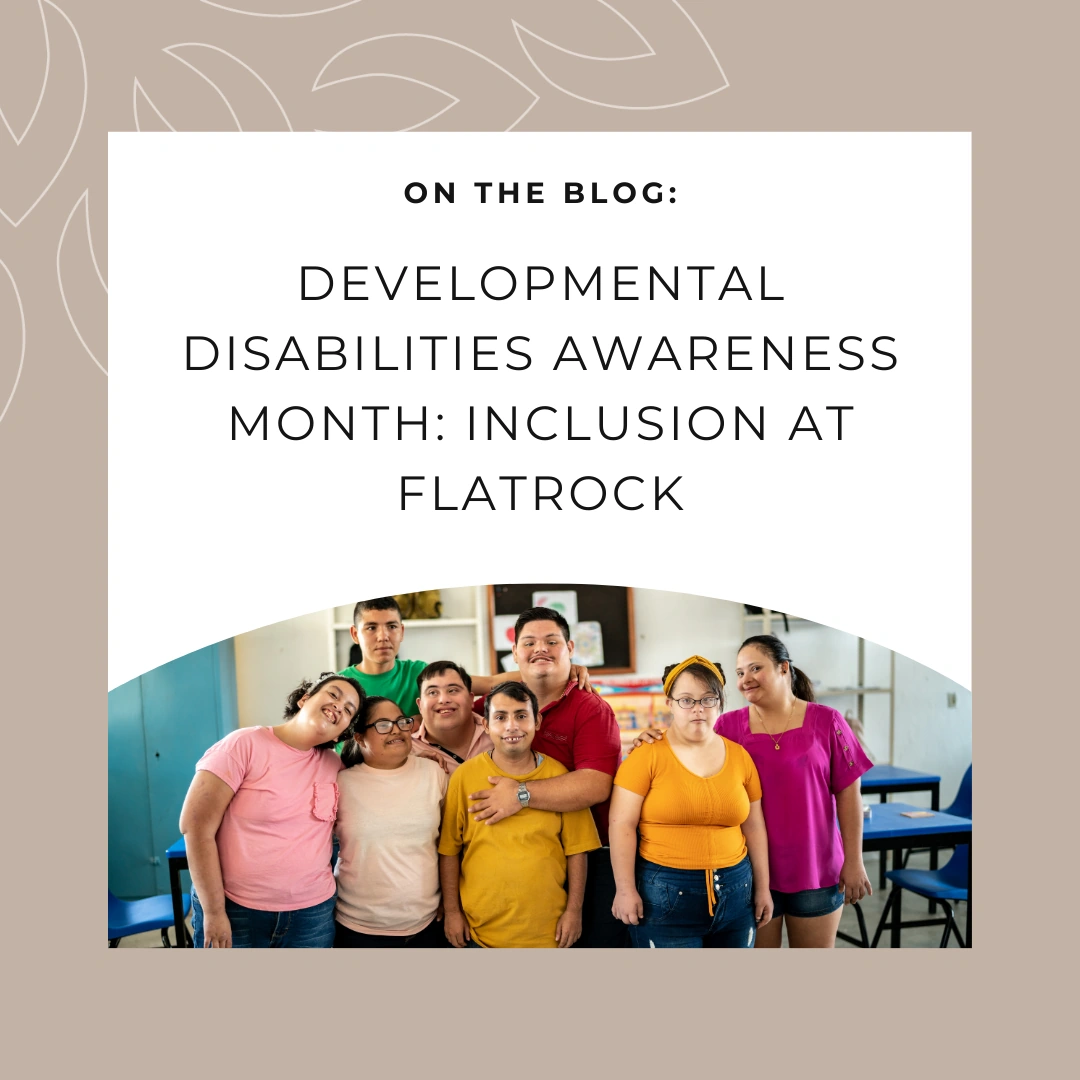
Working with individuals with intellectual and developmental disabilities (IDD)provides constant insight into what meaningful inclusion entails. Developmental Disabilities Awareness Month offers a moment to reflect more intentionally. It’s a chance to pause and think a little deeper about what inclusion looks like. Not as just an idea, but as a lived everyday practice.
For individuals with developmental disabilities, inclusion is not something that happens once a year. It shapes daily life. It impacts confidence, independence, and whether someone truly feels like they belong.
At Flatrock, this work isn’t seasonal. It’s steady. It shows up in small adjustments, patient conversations, and the time and space needed for residents to grow at their own pace.
Awareness starts the conversation, but inclusion is what we practice every day.
Why Developmental Disabilities Awareness Month Matters
March is a chance to pause and reflect on what inclusion looks like in practice. Developmental Disabilities Awareness Month is about more than recognition. It is about creating communities where individuals feel valued, capable, and connected.
Developmental disabilities are more common than people realize. The Centers for Disease Control and Prevention reports that 1 in 6 children in the United States has a developmental disability. These conditions can impact physical, learning, language, or behavioral development and often continue into adulthood.
Behind those statistics are real people with their own individual goals, personalities, and strengths. Keeping that front and center influences how residents are supported and empowered across Flatrock communities.
Inclusion Starts with Listening
Authentic inclusion starts with something simple: listening.
Person-centered support is not about fitting someone into a pre-built system. It’s about shaping the support around each individual. This takes time, patience, and it starts with asking real questions like:
- What does independence look like to you?
- What skills or hobbies do you want to improve?
- What makes you feel confident?
When individuals are invited into these conversations, ownership and motivation flourish, creating a foundation for confidence and self-determination.
Research from the American Association on Intellectual and Developmental Disabilities shows that individualized support increases self-determination and overall quality of life. When people have meaningful input into their goals and routines, engagement rises naturally.
Inside Flatrock homes, that belief shows up in practical ways. Some residents are building more independence with daily tasks like organizing personal routines. Others light up in creative workshops, art projects, or music activities where self-expression becomes the source of confidence. Sensory-based activities and spaces are designed to provide calm structure, offering an environment where growth feels steady and safe.
No two people need the exact same thing, and the support reflects that.
Confidence Is Built in Everyday Moments
Growth is rarely sudden. Instead, it emerges in consistent, small moments that may seem ordinary, but are profoundly transformative.
It might be preparing part of a meal with less assistance.
It might be participating more during a group activity.
It might be navigating a community outing with independence.
On the surface, these moments can seem small, but to the person experiencing them, they are not small at all. They build self-trust, capability, and momentum.
In Flatrock homes, staff support these moments while also creating space. Space to try, practice, and make mistakes in a safe environment. That balance between guidance and independence is where confidence really takes root.
Over time, steady wins turn into meaningful milestones.
Community Connection Is Ongoing Work
Skill-building is only part of inclusion. Feeling confident and engaging in the world around you matters just as much.
The Natural Core Indicators show that individuals who feel connected to their communities report higher life satisfaction. That truth is universal. We all do better when we feel like we belong.
At Flatrock, the focus is on building confidence from the inside out. That means strengthening communication skills, self–advocay and emotional regulation first. Simple, structured activities like creating vision boards, holiday cards, hosting dance parties, or spending time in our sensory room create safe opportunities to practice expression and decision-making.
Those experiences may look small, but they create a foundation.
Inclusion is not a switch you flip; it’s a process. There are moments when things feel easy and moments when progress feels slower. There are steps forward and sometimes steps back.
Each win, like speaking up, trying again, and feeling more confident in a situation that once felt overwhelming, matters.
The goal isn’t perfection, it's progress at a pace that feels safe and sustainable. That is what inclusion looks like day after day.
Awareness Is Just the Beginning
Developmental Disabilities Awareness Month shines a brighter light on these conversations, but the work does not begin or end in March.
Awareness matters. It opens doors and starts dialogue.
But inclusion requires more than awareness. It requires intention, patience, flexibility, and willingness to ask, “How can we do this better?”
At Flatrock, person-centered support does not live in a handbook. It shows up in daily interactions, in small program adjustments, and in celebrating progress, even when progress looks incremental. It also shows up around shared meals, inside creative workshops, and during conversations about new goals.
It shows up when confidence is slowly and steadily built.
That steady effort is what makes inclusion real, not something we talk about, but something we practice every single day.
To learn more about how Flatrock supports individuals with developmental disabilities through person-centered care and intentional inclusion, please contact our team here. See how our homes foster independence, confidence, and meaningful community every day.