
The Power of Communication: How Sign Language and Inclusive Communication Support Independence
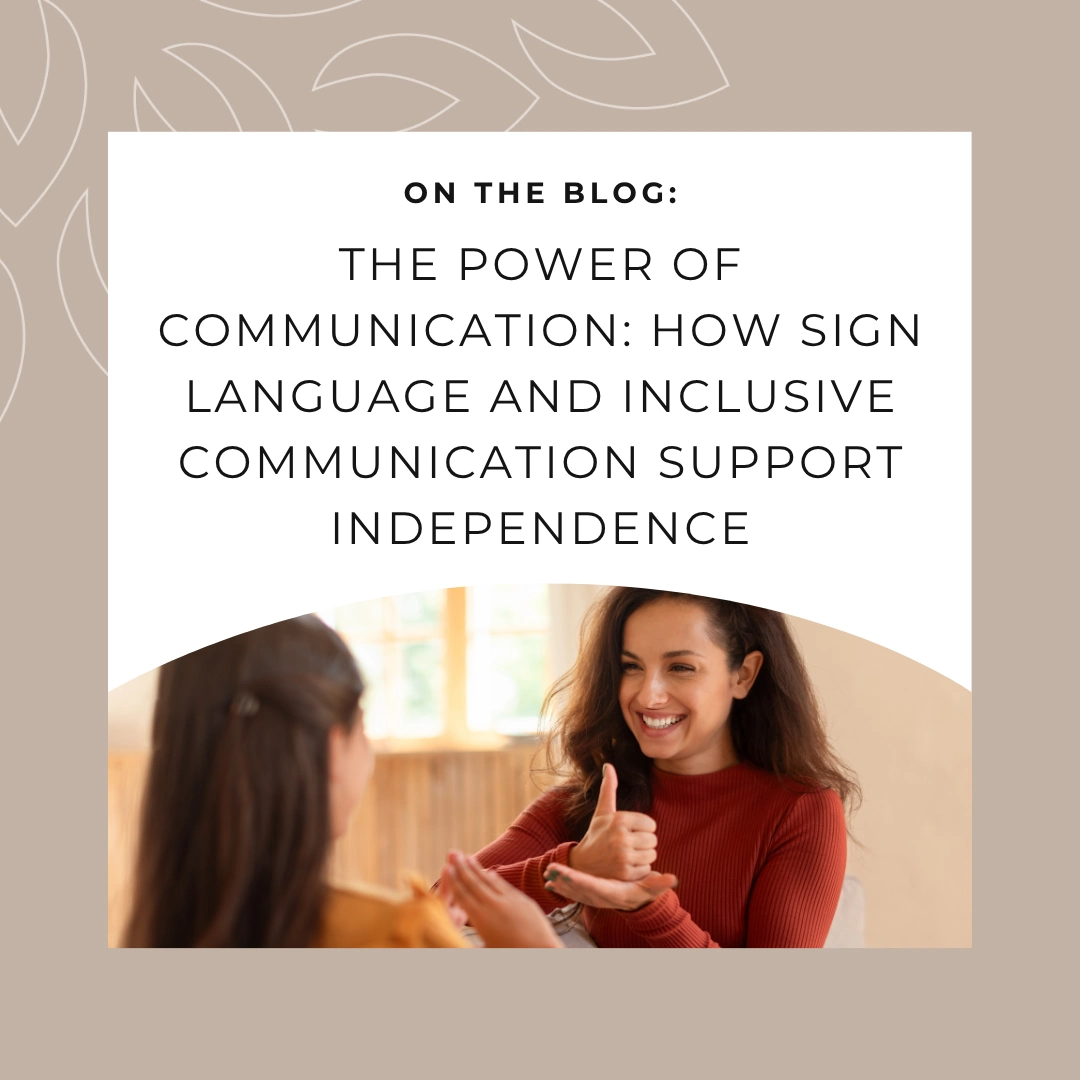
Communication is fundamental to how we navigate everyday life. We use it to ask for help, make choices, share how we are feeling, connect with others, and express what we need. But communication does not look the same for everyone.
For adults with intellectual and developmental disabilities (IDD), having access to communication tools that work for their individual needs can make a significant difference in quality of life. Depending on the individual, communication may look like sign language,e pictures, visual schedules, gestures, written communication, technology, or a combination of different strategies.
What matters most is making sure every person has a way to communicate, participate, and be heard. Communication support should be individualized, accessible, and responsive to the way each person understands and interacts with the world around them.
In recognition of International Day of Sign Language on September 23, this is an opportunity to look at the important role communication plays in supporting independence, safety, relationships, and quality of life for adults with IDD.
Communication Looks Different for Everyone
There is no one-size-fits-all approach to communication.
Some people communicate through spoken words, while others may use American Sign Language (ASL), gestures, facial expressions, communication devices, pictures, or other forms of augmentative and alternative communication (AAC). What works for one person may not work for another, and communication needs can also change depending on the situation.
For example, someone may be comfortable communicating verbally at home but use visual supports when learning new routines. Another individual may rely on sign language or a communication device to express needs and preferences throughout the day. Understanding these differences is an important part of providing meaningful support.
A 2026 study published in the Journal of Applied Research in Intellectual Disabilities found that many adults with IDD living in group homes may not be receiving the communication support they need. Researchers found that only 39.7% of individuals who were recommended for a communication assessment actually received one. Funding limitations, competing priorities, and limited access to services were among the barriers in the study.
These findings are a good reminder that communication needs should be part of everyday support. When individuals have the right tools and strategies in place, they have more opportunities to express themselves, make choices, and feel confident in their daily lives.
The Importance of Sign Language
Sign language can be an important way for individuals to communicate their thoughts, needs, feelings, and preferences. For people who are deaf or hard of hearing, sign language provides an essential way to communicate and connect with others. It can also be one of several communication strategies used by individuals with different disabilities.
The United Nations (UN) recognizes September 23 as International Day of Sign Languages, highlighting the importance of sign language and raising awareness about the rights of people who are deaf. The UN also notes that there are 72 million deaf individuals worldwide who collectively use more than 300 different sign languages.
The need for accessible communication extends beyond the deaf community. According to the World Health Organization’s data, more than 430 million people worldwide require rehabilitation for disabling hearing loss, and that number is expected to grow in the coming decades.
While sign language may not be the right communication method for every individual with IDD, the broader message is important: people need access to communication methods that work for them. Even learning a few simple signs can sometimes help make everyday interactions easier and give individuals another way to communicate a need or preference.
Visual Supports Can Encourage Independence
Communication is not always about talking or signing. Visual support can also make everyday routines easier to understand and follow. A visual schedule, picture chart, checklist, calendar, or written reminder can help an individual know what to expect throughout the day.
Think about how often you use visual reminders in your own life. Maybe it’s a calendar on your phone, a grocery list, or a reminder about an upcoming appointment. These tools help us stay organized and remember what comes next. For adults with IDD, similar tools can provide structure while also encouraging greater independence. Visual support may include:
- Daily schedules
- Picture cars
- Checklists
- Calendars
- Written instructions
- Labels around the home
- Communication apps or devices
These tools can be especially helpful when introducing a new routine or preparing for a change. For example, a visual schedule showing breakfast, getting dressed, therapy, lunch, and community activities can help someone understand what their day will look like. Over time, they may be able to follow that schedule with less support. Those small steps can build confidence.
Communication Supports Safety and Choice
Being able to communicate is also an important part of staying safe. Everyone should have a way to tell someone when they are uncomfortable, ask for help, express that something is wrong, or make their preferences known. For adults with IDD, having a reliable communication method can make these everyday situations easier to navigate.
Communication can also play an important role in healthcare. Bringing about to explain symptoms, understand instructions, ask questions, and communicate concerns helps individuals take a more active role in their own care. The Centers for Disease Control and Prevention (CDC) reports that more than 1 in 4 U.S. adults have disability, citing cognitive, mobility, independent living, hearing, vision, and self-care disabilities as among the most common types reported.
While disability and communication needs are different for every individual, these numbers reinforce the importance of creating environments where people have the support they need to participate in everyday activities. For adults with IDD, that can start with something as simple as offering choices such as:
- “What would you like for breakfast?”
- “Would you like to go for a walk or work on a craft?”
- “Do you need help?”
Giving someone the opportunity to answer, in whatever way works best for them, is an important part of supporting independence.
Communication Helps Build Stronger Relationships
Communication is about more than getting information from one person to another. It is also how we build relationships. When someone feels understood, it can be easier to build trust and confidence with family members, caregivers, friends, and other people in their community.
Sometimes supporting communication means slowing down and giving someone extra time to respond. It may mean asking questions in a different way or using a picture instead of a verbal explanation. It can also mean paying attention to nonverbal communication.
A facial expression, gesture, change in behavior, or body language may communicate something important. Taking the time to understand these forms of communication can help caregiver support professionals better understand an individual’s needs and preferences.
A study on communication access for adults with IDD also found that communication difficulties were affecting behaviors and quality of life for some individuals who were not receiving adequate support. When communication becomes easier, connection can become easier too.
A Person-Centered Approach Makes a Difference
Every adult with IDD has different strengths, interests, preferences, and goals. Their communication needs should be just as individualized. At Flatock, a person-centred approach means getting to know each resident and understanding what helps them feel comfortable, confident, and supported.
For one resident, that may mean verbal communication and simple reminders. For another, it could mean visual schedules, gestures, sign language, or a communication device. There is no need to force everyone into the same system.
Instead, communication support can become part of everyday life. It can happen while choosing what to eat, getting ready for the day, participating in therapies, or spending time with friends and direct care workers. These everyday opportunities give individuals that change to practice communication while making their own choices. Those choices matter.
Independence does not always mean doing everything without support. Sometimes, independence means having the right tools and people around you to make your own decisions and express what you want.
Every Person Deserves to Be Heard
International Day of Sign Language is an important reminder that communication should be accessible to everyone. For adults with IDD, finding the right communication strategies can open the door to greater independence, stronger relationships, improved safety, and more meaningful participation in everyday life.
Flatrock’s individualized support is about meeting each resident where they are and creating an environment where they can continue to build confidence, develop life skills, strengthen relationships, and work toward greater independence.
Communication is about more than words. It’s about having a voice, making choices, connecting with others, and knowing that you are heard. If you’re exploring adult foster care for a loved one with IDD, contact Flatrock to learn more about its person-centered approach and how individualized support can help adults with IDD build greater independence, confidence, and quality of life.